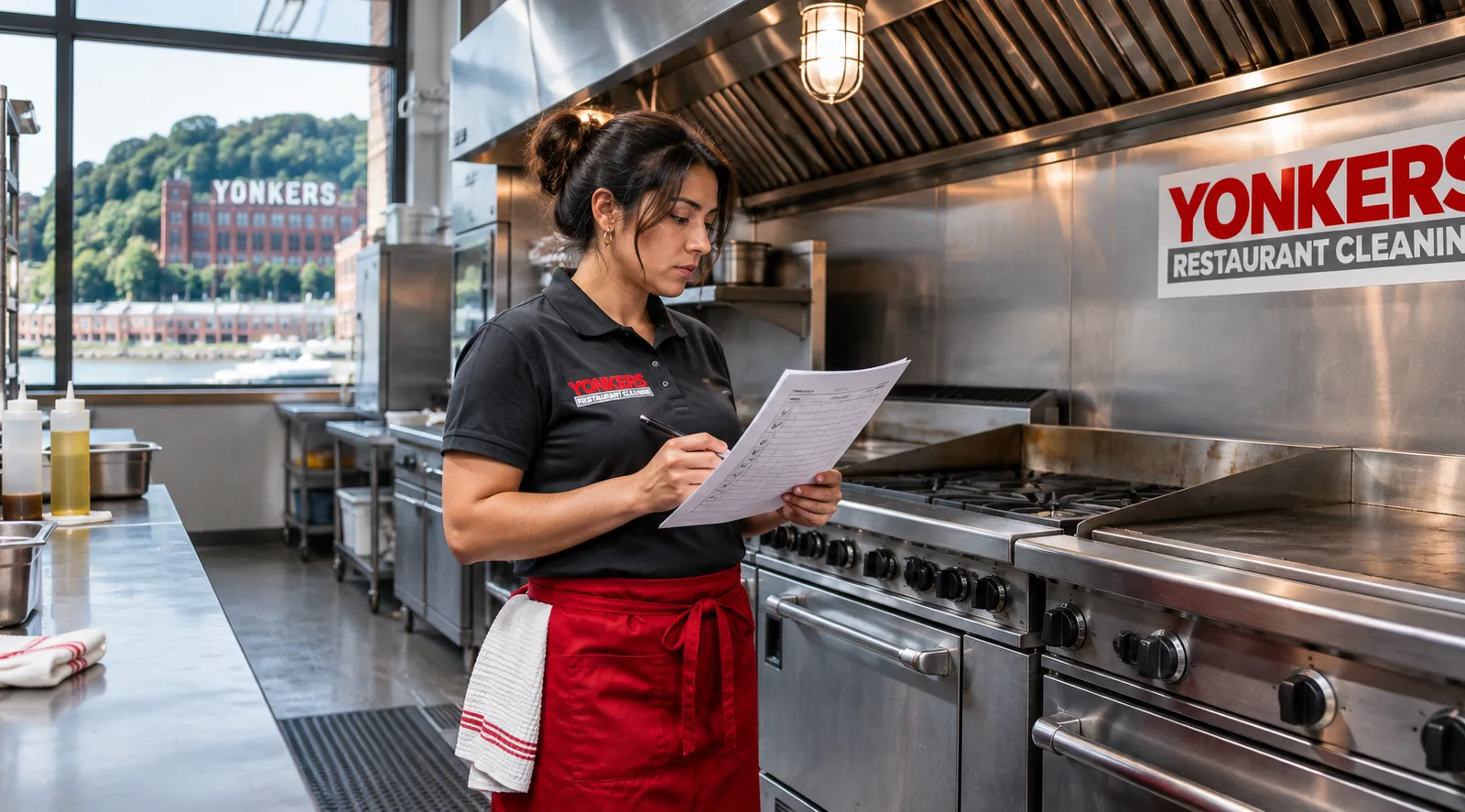
A restaurant employee using a printed checklist while inspecting a clean commercial cooking line, stainless steel prep surfaces, and floor in a Yonkers kitchen
Kitchen Cleaning Checklist · Yonkers

Restaurant Kitchen Cleaning Checklist

Build a practical cleaning schedule for every shift, assign clear responsibilities, and know when heavy grease or hard-to-reach equipment calls for professional help.

✓Shift-based duties ✓Approved methods ✓Assigned responsibilities ✓Manager verification
Clear, Verifiable Duties

A Working Checklist for a Cleaner Commercial Kitchen

A restaurant kitchen cleaning checklist turns sanitation duties into assigned, verifiable work. It should identify the surface or equipment, the cleaning method, the approved chemical, the required frequency, the responsible position, and a place to record completion. Keep the working copy where shift leaders can review it rather than filing it where the crew cannot use it.

Start with the food-safety plan and procedures that apply to your operation. New York State Food Code requirements cover matters such as cleaning food-contact surfaces, preventing cross-contamination, chemical storage, and maintaining equipment and premises in sanitary condition. Your checklist should also follow equipment manufacturers' instructions and each chemical label. Never mix cleaning chemicals, and never assume one product is suitable for every metal, cutting surface, or floor.

Yonkers restaurants vary in layout and operating pace. Getty Square establishments may need cleaning tasks timed around dense pedestrian activity and delivery windows, while restaurants near the Cross County Shopping Center may face sustained meal-period traffic. Older commercial spaces along South Broadway can have tight equipment spacing that makes access behind cooklines difficult. Those conditions affect when work is scheduled and whether equipment must be moved. Yonkers Restaurant Cleaning works as restaurant experts throughout Yonkers, helping operators turn broad cleaning goals into a written scope that fits the actual kitchen.

Daily Through Scheduled Work

Restaurant Kitchen Cleaning Checklist by Frequency

During Every Shift

Wipe spills promptly, keep wiping cloths in the correct sanitizer solution, change contaminated gloves, remove food debris, clean and sanitize food-contact surfaces between incompatible tasks, and keep raw-food areas separated from ready-to-eat work. Monitor sanitizer concentration with the test method specified for the product.

At Closing

Wash, rinse, and sanitize removable food-contact parts. Clean prep tables, sinks, cutting boards, smallwares, exterior equipment surfaces, handles, switches, splash areas, and service carts. Sweep or collect debris before wet-cleaning floors. Empty waste, clean bins as needed, and leave floor drains and handwashing sinks unobstructed.

Weekly

Degrease accessible areas behind and beneath movable equipment, clean shelving, wash wall splash zones, detail casters and legs, clean gaskets, and inspect corners for grease or food buildup. Review low-use utensils and storage containers rather than limiting the checklist to the active cookline.

Monthly or Scheduled

Deep-clean ovens and other cooking equipment according to manufacturer instructions, detail walk-in floors and shelving, clean high ledges, inspect ceiling vents, and address buildup under fixed equipment where access permits. Schedule tasks that require shutdown, cooling, disassembly, or specialist access.

After a Spill or Incident

Add immediate procedures for broken glass, raw-protein spills, sewage backups, pest evidence, and bodily-fluid incidents. Isolate the area, protect food, use the correct personal protective equipment, and document corrective action. A routine closing procedure is not enough for an exceptional contamination event.

Before Reopening

Verify that food-contact surfaces are clean and sanitized, chemicals are labeled and stored away from food, equipment is reassembled correctly, floors are dry enough for safe use, and no residue or loose parts remain. A manager should sign off before production resumes.

Wash, Rinse, Sanitize

Use the Correct Cleaning Sequence

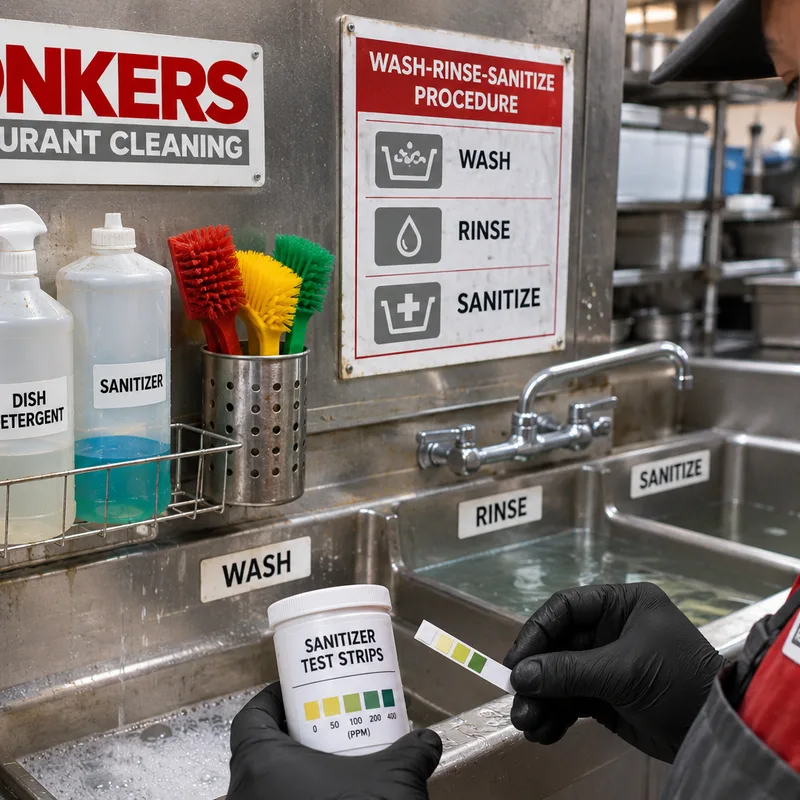
Cleaning removes grease, food, and soil. Sanitizing reduces microorganisms on a surface that has already been cleaned. For washable food-contact items, the usual sequence is scrape or pre-clean, wash, rinse, sanitize, and air-dry. Skipping the rinse or applying sanitizer over grease can prevent the process from working as intended.

Confirm the sanitizer concentration, contact time, water requirements, and compatible surfaces on the product label. Use the correct test strips or test kit. Do not towel-dry sanitized food-contact items because cloths can recontaminate them. For equipment that cannot be submerged, follow the manufacturer's disassembly and cleaning instructions, protect electrical components, and verify that guards and removable parts are replaced correctly.

Color-coded tools can help separate food-preparation areas, restrooms, and floor work, but color alone does not make a tool sanitary. Brushes, squeegees, mop heads, and buckets need their own cleaning, drying, and storage routine. Store them off the floor and away from food or clean utensils.

Labeled commercial-kitchen cleaning supplies, sanitizer test strips, color-coded brushes, and a posted wash-rinse-sanitize procedure beside a three-compartment sink
Labels, test methods, and tool separation should match the products and procedures used in the kitchen.
From Map to Manager Review

How to Put the Checklist Into Daily Use

  1. 01

    Map the Kitchen by Zone

    Walk the cookline, prep area, warewashing station, dry storage, refrigeration, receiving area, waste area, employee space, and floors. Record equipment hidden by doors, drawers, guards, and removable panels. Include vertical and overhead surfaces where grease or dust can collect.

  2. 02

    Set the Right Frequency

    Base frequency on food contact, grease production, spill risk, traffic, and manufacturer guidance. A prep table may need attention throughout a shift, while a high ledge may be handled on a scheduled deep-clean. Increase frequency when inspection shows buildup before the next planned task.

  3. 03

    Write a Specific Method

    Replace vague directions such as “clean grill area” with measurable work: allow equipment to cool, remove approved parts, scrape residue, apply the compatible degreaser, rinse where required, dry or sanitize as appropriate, reassemble, and clean the floor beneath it.

  4. 04

    Assign Roles and Records

    Assign each duty to a position or shift rather than relying on “everyone.” Give a manager responsibility for verification. Completion logs should record the date, time, initials, exceptions, and corrective action so missed work is found before it becomes established buildup.

  5. 05

    Audit and Adjust

    Inspect under equipment, inside seals, around fasteners, at wall-to-floor junctions, and near drains. If the same area repeatedly fails review, change the frequency, access plan, tools, or training. Keep professional deep cleaning separate from staff tasks so responsibility stays clear.

High-Soil and Specialized Areas

Equipment and Areas That Need Extra Attention

Cooking equipment creates different cleaning problems. Fryers collect polymerized oil and splatter around sides, casters, and nearby floors. Griddles and ranges develop carbonized residue. Ovens may require specific products and shutdown time. Never spray hot equipment or use a chemical that the manufacturer does not approve. Gas, electrical, and fire-suppression components should not be disturbed by unqualified personnel.

Refrigeration needs a food-safe plan. Protect or relocate food before cleaning, limit door-open time, and keep water away from electrical parts. Clean shelving, handles, gaskets, drip areas, and accessible fan guards according to equipment instructions. Record damaged seals, standing water, rust, or temperature concerns for repair rather than treating them as cleaning defects.

Floors should be cleaned after dry debris and movable obstacles are removed. Match the degreaser and dilution to the soil, allow the labeled dwell time, agitate textured flooring, recover dirty solution, rinse if required, and leave a safe walking surface. Corners, grout lines, floor-wall junctions, casters, and the space beneath the cookline often need manual agitation. In Yonkers winters, tracked-in moisture and deicing residue can increase entry and back-of-house floor work, so wet-floor controls and more frequent spot cleaning may be necessary.

Kitchen exhaust systems require separate judgment. Staff can wipe accessible exterior surfaces when permitted by the equipment instructions, but grease removal inside hoods, ducts, and fans is specialized work tied to fire safety. Coordinate that work with the restaurant's qualified exhaust-system provider rather than placing it on an ordinary closing checklist.
Defined Professional Scope

When Professional Deep Cleaning Makes Sense

Professional cleaning is useful when routine crews cannot safely access grease behind fixed equipment, when buildup needs commercial degreasers and agitation, or when the work would interfere with food production. It can also support a reset before a new cleaning schedule begins. The written scope should state which equipment may be moved, what must remain connected, which surfaces are included, and who handles disassembly.

Before the appointment, remove or protect food, smallwares, paper goods, and open containers. Identify sensitive finishes, loose tiles, damaged grout, exposed wiring, leaks, or equipment that cannot be shifted. The kitchen should be cool enough for the agreed work, and staff should know when each zone will be unavailable. Professional cleaners should not disconnect utilities, repair equipment, treat pests, or service internal exhaust ducts unless those tasks are separately assigned to qualified providers.

Yonkers Restaurant Cleaning serves operators from its base at 18 Park Hill Ave, Suite 4. A walkthrough helps establish access, soil level, shutdown limits, water availability, and the condition of floors and equipment before the scope is set.

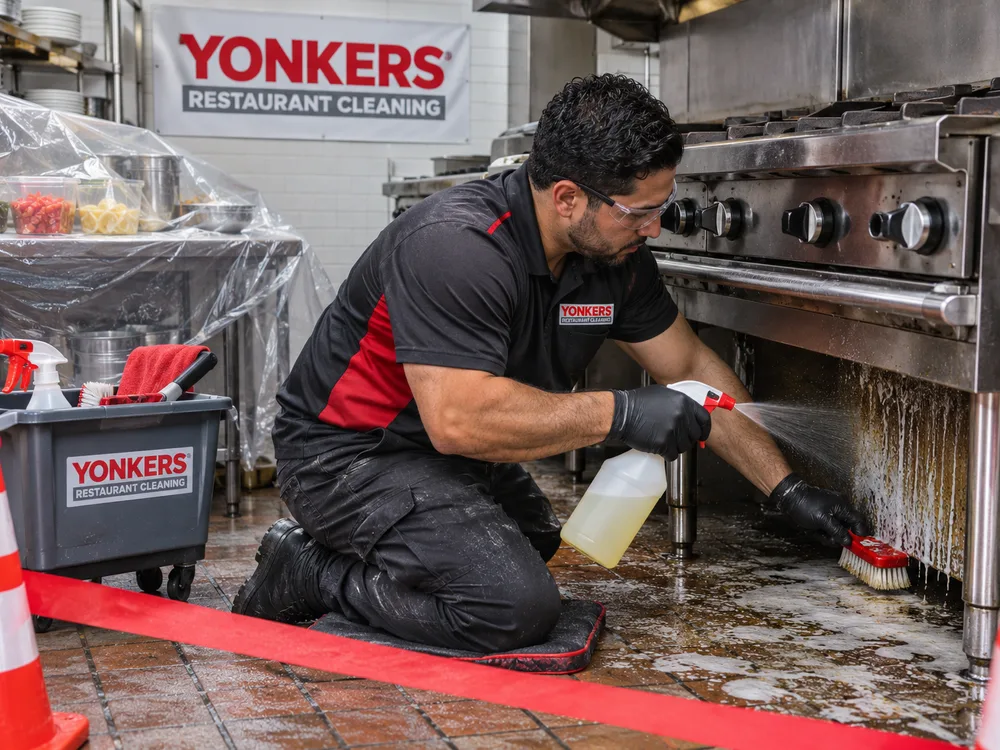
A trained cleaner degreasing the accessible sides and floor beneath a cooled commercial range while nearby food and smallwares are protected and the work area is marked off
A defined scope separates safe, accessible cleaning from repair and specialty system work.

If grease buildup, limited access, or an upcoming inspection has outgrown the closing routine, arrange a walkthrough and get a written cleaning scope built around your kitchen's equipment and operating hours.

Call for a Free Quote
Planning and Professional Help

Questions About Restaurant Kitchen Cleaning in Yonkers

How much does professional restaurant kitchen cleaning cost in Yonkers?+
Pricing depends on kitchen size, grease level, equipment density, access, and whether the work requires an overnight or shutdown window. A small prep kitchen with light soil is different from a high-volume cookline with fryers and heavy buildup. Moving equipment, protecting food, hand-scrubbing textured floors, and repeat treatment add labor. A walkthrough is the soundest way to confirm a written scope and price.
How often should a restaurant kitchen be deep-cleaned?+
Deep-cleaning frequency should be based on use, soil accumulation, equipment instructions, and inspection results rather than one universal interval. High-grease equipment and tight spaces may need more frequent attention than dry storage or low-use areas. In busy Getty Square operations, short turnaround times may make smaller scheduled cleaning zones more workable than one long shutdown.
Can professional cleaners work after the restaurant closes?+
After-hours work can often be scheduled when access, building rules, cooling time, and reopening requirements are confirmed in advance. The crew needs enough time for chemical dwell time, agitation, recovery of dirty solution, rinsing where required, and drying. Yonkers operators should also plan for keys, alarms, loading access, waste handling, and a manager's final sign-off.
What should staff clean, and what should be assigned to professionals?+
Staff should handle trained routine tasks such as food-contact surface cleaning, warewashing, spill response, waste control, and closing duties. Professionals are often brought in for heavy grease, difficult access, floor restoration, or detailed cleaning around equipment. Internal hood and duct cleaning, pest treatment, equipment repair, and utility disconnection belong to appropriately qualified providers.
Does a clean kitchen guarantee a successful health inspection?+
No. Cleaning supports sanitation, but an inspection can also address food temperatures, handwashing, cross-contamination, storage, employee practices, equipment condition, pest control, and records. Use the current New York State Food Code and directions from the authority responsible for the establishment. A completed checklist is useful only when managers verify that the listed work was done correctly.
How long does a commercial kitchen deep cleaning take?+
The time depends on the scope, soil level, number of cleaners, equipment access, and required drying or reassembly. A limited floor-and-cookline job may fit within a closed period, while a heavily soiled kitchen may need staged work across more than one closure. The schedule should include setup, food protection, inspection, and reopening checks, not only active scrubbing time.
What must be prepared before cleaners arrive?+
Food and clean smallwares should be removed or securely protected, cooking equipment should be shut down and cooled as agreed, and access routes should be clear. Mark equipment that cannot be moved, disclose leaks or damaged surfaces, and identify alarm or building-entry procedures. Confirm who may move appliances and who will inspect the kitchen before production resumes.
Define the Next Cleaning

Put a Clear Kitchen Cleaning Plan in Place

Tell Yonkers Restaurant Cleaning about the cookline, floors, equipment access, operating hours, and current buildup. We will help define the work that needs professional attention so your staff checklist stays practical and accountable.