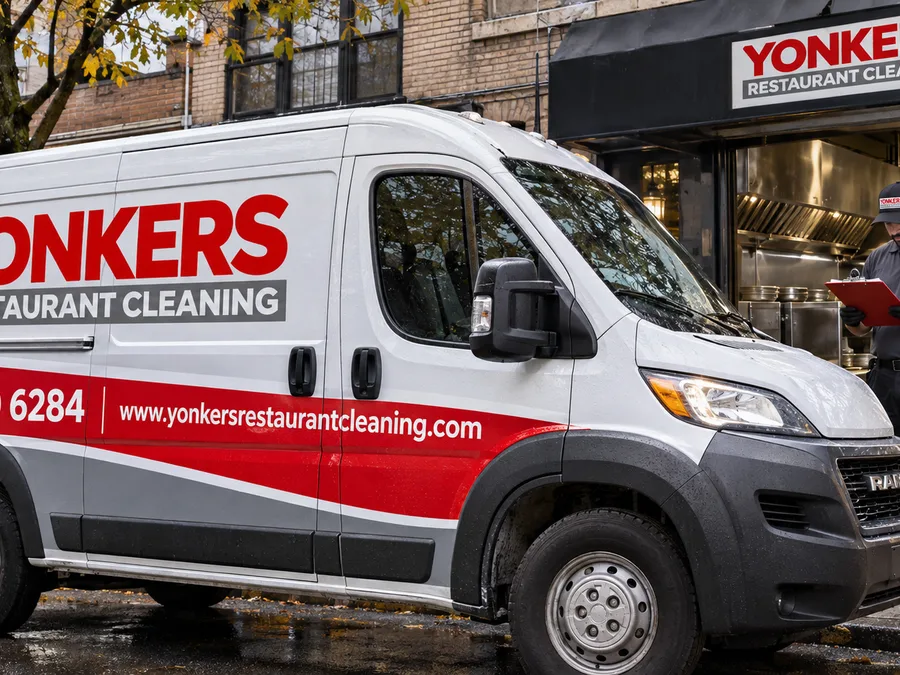
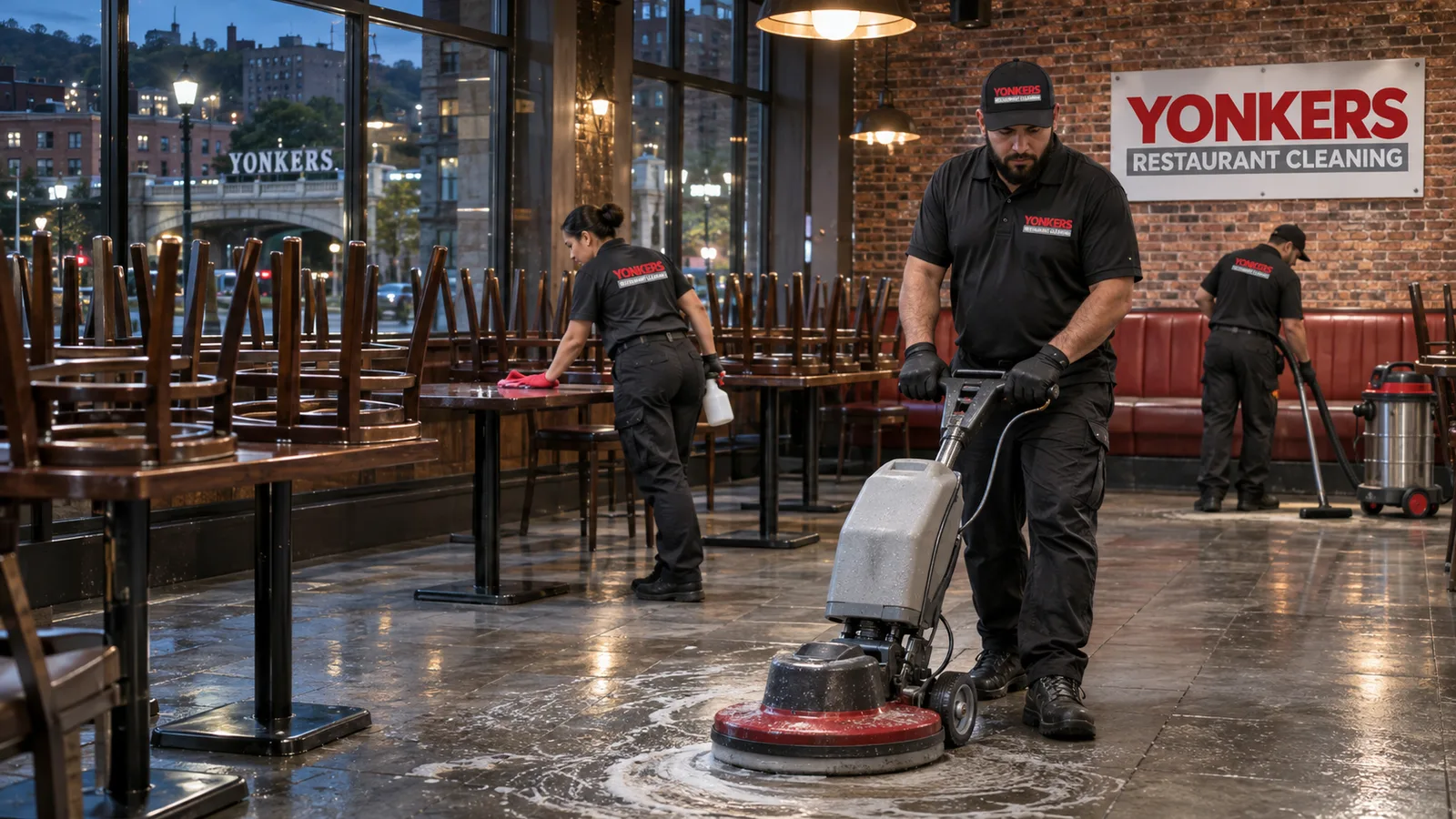
A professional janitorial crew cleaning the dining room of a Yonkers restaurant after closing, with chairs raised and floors being serviced
Overnight Restaurant Cleaning · Yonkers

Overnight Restaurant Cleaning in Yonkers

A dependable nightly crew cleans kitchens, dining rooms and restrooms after service so your staff can open to a restaurant that is ready for the next shift.

✓Recurring nightly service ✓Defined cleaning scope ✓After-closing access plan ✓Kitchen, dining and restroom care
Ready for the Next Shift

Reliable Cleaning After the Last Guest Leaves

Overnight Restaurant Cleaning keeps routine janitorial work out of the way of guests, servers and kitchen staff. Once the restaurant closes, the crew follows an agreed checklist covering food-service floors, dining surfaces, restrooms, touchpoints, waste removal and other assigned areas. The goal is simple: complete the recurring work before the opening team arrives.

Yonkers Restaurant Cleaning provides recurring service from 18 Park Hill Ave for restaurants that need consistent work rather than occasional attention. For each location, Yonkers' local restaurant service builds the cleaning plan around operating hours, the layout of the premises and the condition expected at handoff. Managers get a defined scope, service frequency and access plan before nightly work begins.

Restaurant cleaning is different from general office janitorial work. Grease travels beyond the cook line, food debris collects along edges and under movable equipment, and restroom traffic can remain heavy until closing. A restaurant janitorial company should understand cleaning versus sanitizing, use products according to their labels and avoid cross-contamination between restrooms, dining areas and food-service zones.

Defined Nightly Coverage

What Restaurant Night Cleaning Can Cover

Dining Rooms and Guest Areas

Tables and assigned surfaces are wiped, floors are vacuumed or mopped, entry glass is spot-cleaned, and debris is removed from corners, baseboards and beneath accessible furniture. The exact tasks depend on the agreed closing setup.

Kitchen Floors and Accessible Surfaces

Crews remove loose debris, address grease on assigned floors and clean accessible non-food-contact surfaces. Degreasers need the correct dilution and dwell time, while floor methods must suit tile, quarry tile, vinyl or other installed materials.

Restaurant Restroom Cleaning

Toilets, urinals, sinks, mirrors, partitions and touchpoints are cleaned under a restroom-specific checklist. Consumables can be replenished when the restaurant supplies them, and restroom tools remain separated from dining and kitchen tools.

Waste and Liner Replacement

Interior receptacles are emptied, liners are replaced and collected waste is moved to the restaurant's designated disposal area. Any handling rules for cardboard, recycling, glass or food waste should be documented in the scope.

High-Touch Surfaces

Door handles, push plates, railings and other assigned touchpoints receive routine attention. Sanitizers and disinfectants are different products, so each is used only where appropriate and for its labeled contact time.

Periodic Detail Tasks

Edge cleaning, baseboards, chair legs, reachable vents and other buildup-prone areas can rotate through a scheduled detail plan. These tasks are documented separately so daily essentials remain the first priority.

Scheduled Around Closing

Nightly Restaurant Cleaning Built Around Your Operation

A practical schedule starts with the closing time and works backward from the required completion time. The crew also needs to know when kitchen breakdown ends, which employees remain after close, how alarms and keys are handled, and which areas cannot be entered until equipment has cooled.

Service needs differ across Yonkers. Restaurants near Getty Square may have compact premises, limited staging space and late pedestrian activity, so access and waste movement need clear instructions. Along Central Park Avenue, larger dining footprints and parking access can change crew size and routing. Waterfront restaurants near the Metro-North station may need cleaning timed around late service and closing staff departures. Park Hill and McLean Avenue businesses often occupy street-facing commercial spaces where secure entry and quiet overnight work matter.

Winter salt and wet grit are tracked through Yonkers entrances, while rainy nights can increase soil around mats and vestibules. The nightly checklist can account for these conditions with entrance mat care, repeated damp mopping when required and attention to slip-prone residue. Any additional seasonal work should be agreed rather than assumed.

An overnight cleaning professional servicing the entrance and dining floor of a Yonkers restaurant, with commercial mats and wet-weather soil visible near the doorway
From Walkthrough to Routine

How Recurring Restaurant Cleaning Starts

  1. 01

    Walk Through the Restaurant

    We review the dining room, kitchen access, bars, restrooms, entrances, stairs and waste route. The walkthrough also identifies floor types, restricted areas and surfaces that require product-specific care.

  2. 02

    Define the Scope and Frequency

    The written scope separates nightly tasks from weekly or periodic detail work. It states service days, approximate access windows, supply responsibilities and any exclusions that restaurant management should know.

  3. 03

    Set Access and Closing Procedures

    Management confirms the key, alarm or lockbox process and names an authorized contact for access issues. The plan should also state what condition the kitchen and dining room will be in when the cleaning crew begins.

  4. 04

    Complete and Document Nightly Work

    The crew follows the location-specific checklist in a consistent order. Kitchen and dining tools are kept separate from restroom tools, and any blocked area, leak, damage or unusual condition is reported.

  5. 05

    Review and Adjust

    Early feedback helps refine timing and task priorities. After the routine is established, periodic inspections can identify recurring misses, changing traffic patterns or detail work that needs to be added to the schedule.

Separated Tools and Methods

Restaurant Restroom Cleaning With Clear Controls

Restrooms need their own tools, color-coded cloths or another clear separation method, and a repeatable top-to-bottom workflow. A typical routine removes waste, applies the proper products, observes required dwell times, cleans fixtures and partitions, services mirrors and sinks, then finishes the floor. Staff should never carry restroom cloths or mop equipment into food-service areas.

A responsible restaurant janitorial cleaning plan also distinguishes ordinary soil removal from disinfection. Cleaning removes dirt and residue. Disinfecting uses an EPA-registered product on a suitable pre-cleaned surface for the label's stated contact time. More product is not better, and incompatible chemicals must not be mixed.

Consumable restocking can be part of nightly service when supplies are available on the premises. Managers should identify storage locations and expected par levels for soap, paper towels, tissue and liners. Leaks, clogged fixtures and damaged dispensers are maintenance issues, but the cleaning crew can report them promptly so restaurant management can arrange repair.

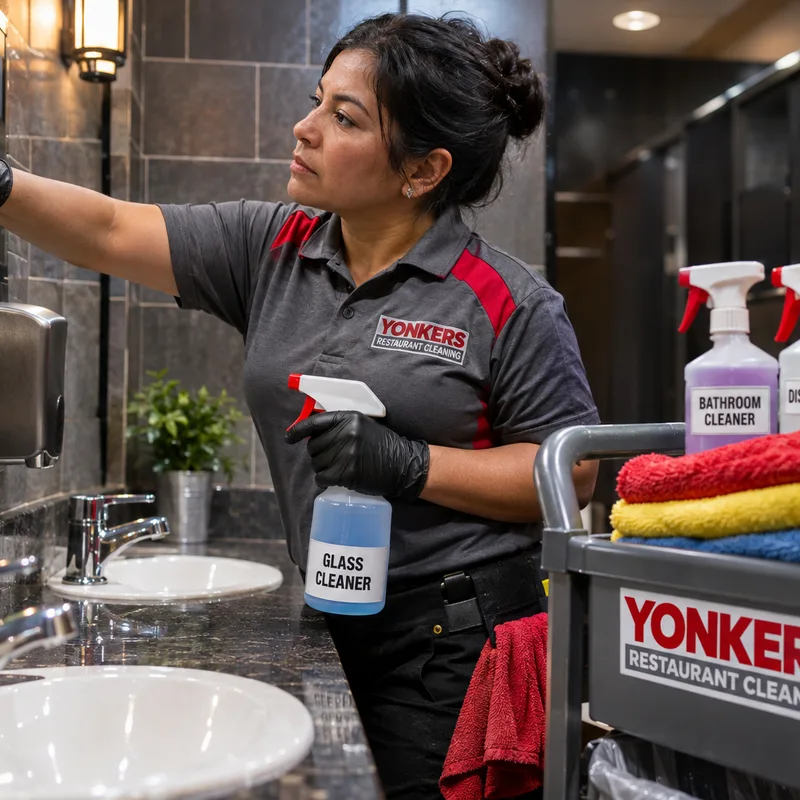
A janitorial professional using color-coded cloths and labeled supplies while cleaning sinks, mirrors and touchpoints in a restaurant restroom
Clear Tasks and Boundaries

A Checklist That Protects Consistency

Daily restaurant cleaning works best when every task has a location, frequency and completion standard. Broad directions such as “clean the floor” leave too much room for interpretation. A useful checklist identifies whether the crew should sweep, vacuum, damp mop or degrease, along with the areas that require edge work or movement of lightweight furniture.

The scope should also separate janitorial cleaning from tasks normally handled by restaurant employees or specialist contractors. Food preparation equipment, cooking appliances, hood systems, grease traps, pest control, exterior pressure washing and repairs require distinct procedures and may fall outside routine overnight service. Defining those boundaries protects both the restaurant and the cleaning crew.

Managers comparing Restaurant Janitorial Services in Yonkers should ask who supplies chemicals and equipment, how substitutions are approved, how missed work is reported, and whether supervisors inspect against the same written checklist. They should also confirm that products are appropriate for each surface and used according to manufacturer labels. Clear answers matter more than a vague promise to clean everything.
Bring your operating schedule, priority areas and current cleaning concerns to the walkthrough. Yonkers Restaurant Cleaning will use them to prepare a recurring scope that fits the way your restaurant closes and reopens.

Call for a Free Quote
Before Nightly Service Begins

Questions About Nightly Restaurant Cleaning in Yonkers

How is Overnight Restaurant Cleaning priced in Yonkers?+
Recurring service is usually priced after a walkthrough rather than by one flat citywide rate. Square footage, number of restrooms, floor materials, grease conditions, service frequency, access time and the amount of furniture movement all affect labor. A compact dining room with one restroom has a different workload than a multi-level restaurant with a bar and large kitchen. The written proposal should identify nightly work and periodic tasks separately.
Can the crew clean after a late restaurant closing?+
Yes, overnight scheduling can be built around a late closing if there is enough time to complete the agreed work before employees return. The access plan needs a realistic handoff time because kitchen breakdown and guest departure often continue after the posted closing hour. Yonkers restaurants near entertainment, transit and waterfront areas should account for variable closing activity when setting the service window.
What is included in Restaurant Restroom Cleaning?+
A typical restroom scope covers waste removal, toilets or urinals, sinks, mirrors, partitions, dispensers, touchpoints and floors. Restocking can be included when the restaurant provides consumables. The crew should use separate restroom tools and follow product label contact times. Plumbing repairs, severe blockages and fixture replacement are reported rather than treated as routine janitorial work.
Do we need nightly service or a less frequent schedule?+
The right frequency depends on operating days, guest volume, menu, floor conditions and the work completed by restaurant employees. Guest areas, restrooms and food-debris zones often require attention every operating night, while baseboards, reachable vents and other detail tasks may rotate. A walkthrough can divide the scope into nightly, weekly and periodic work without weakening daily priorities.
Who provides cleaning products, equipment and restroom supplies?+
Supply responsibility is agreed before service starts and recorded in the scope. The cleaning company may provide routine chemicals and equipment, while the restaurant commonly stocks its preferred soap, tissue, paper towels and liners. Storage space, approved products and surface restrictions should be confirmed during the Yonkers restaurant walkthrough.
How quickly can recurring restaurant janitorial cleaning begin?+
Start timing depends on the walkthrough, scope approval, access arrangements and crew availability. A straightforward single-location schedule can be organized faster than a premises with several levels, restricted kitchen access or specialized floor-care needs. Before the first overnight visit, both parties should have the task list, service days, entry procedure and authorized contacts in writing.
How do you handle winter salt and wet entrance floors?+
The cleaning plan can add mat care, soil removal and repeated damp mopping when winter salt or rain leaves residue at the entrance. Salt film can remain after a quick pass, so the assigned method should suit the installed flooring and avoid excess water. Managers should also keep serviceable entrance mats in place during wet Yonkers weather.
Define Your Nightly Scope

Plan a Cleaner Opening Shift

Tell Yonkers Restaurant Cleaning about your closing hours, floor plan and priority areas. A walkthrough will turn those details into a clear nightly scope, access plan and recurring service schedule.