Cookline and Equipment Exteriors
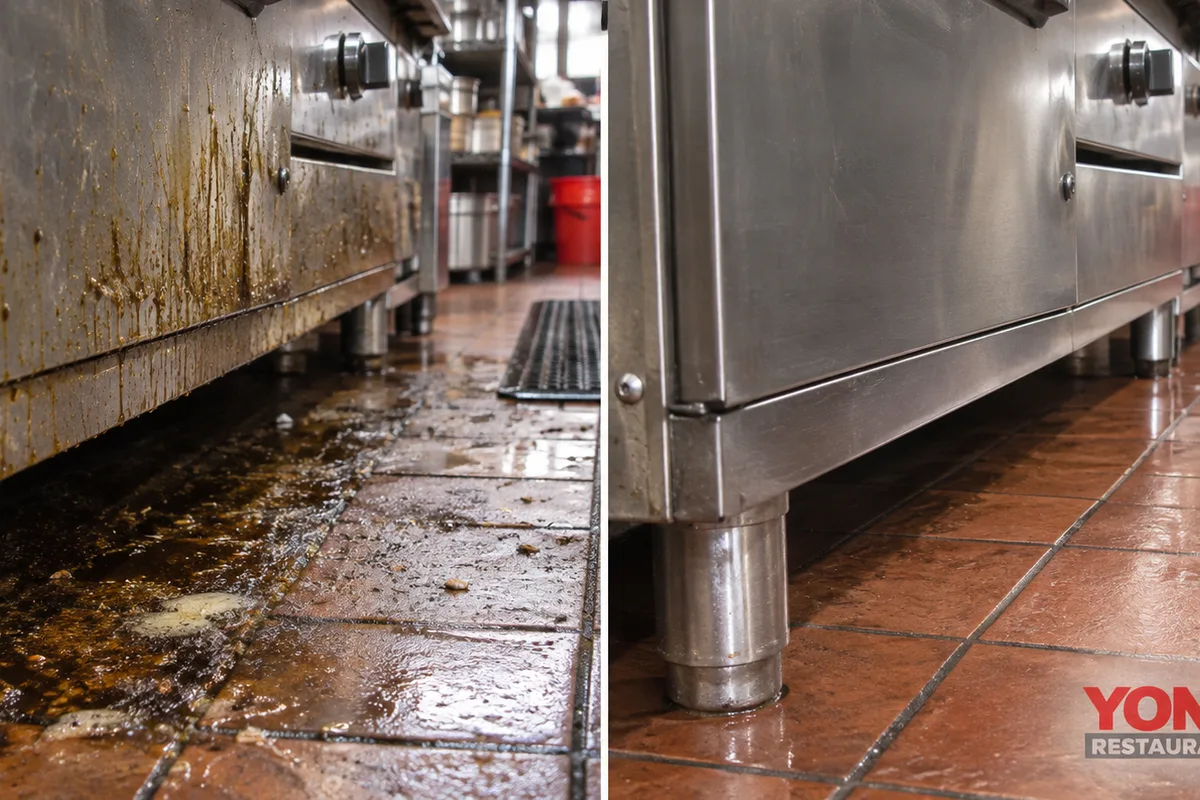
Degreasing may cover accessible exteriors, control surrounds, sides, legs, casters, splash areas, and the floor beneath movable equipment. Equipment is cleaned only when it is safely shut down and cool.
Serving Yonkers, New York & surrounding areas
Open 24/7
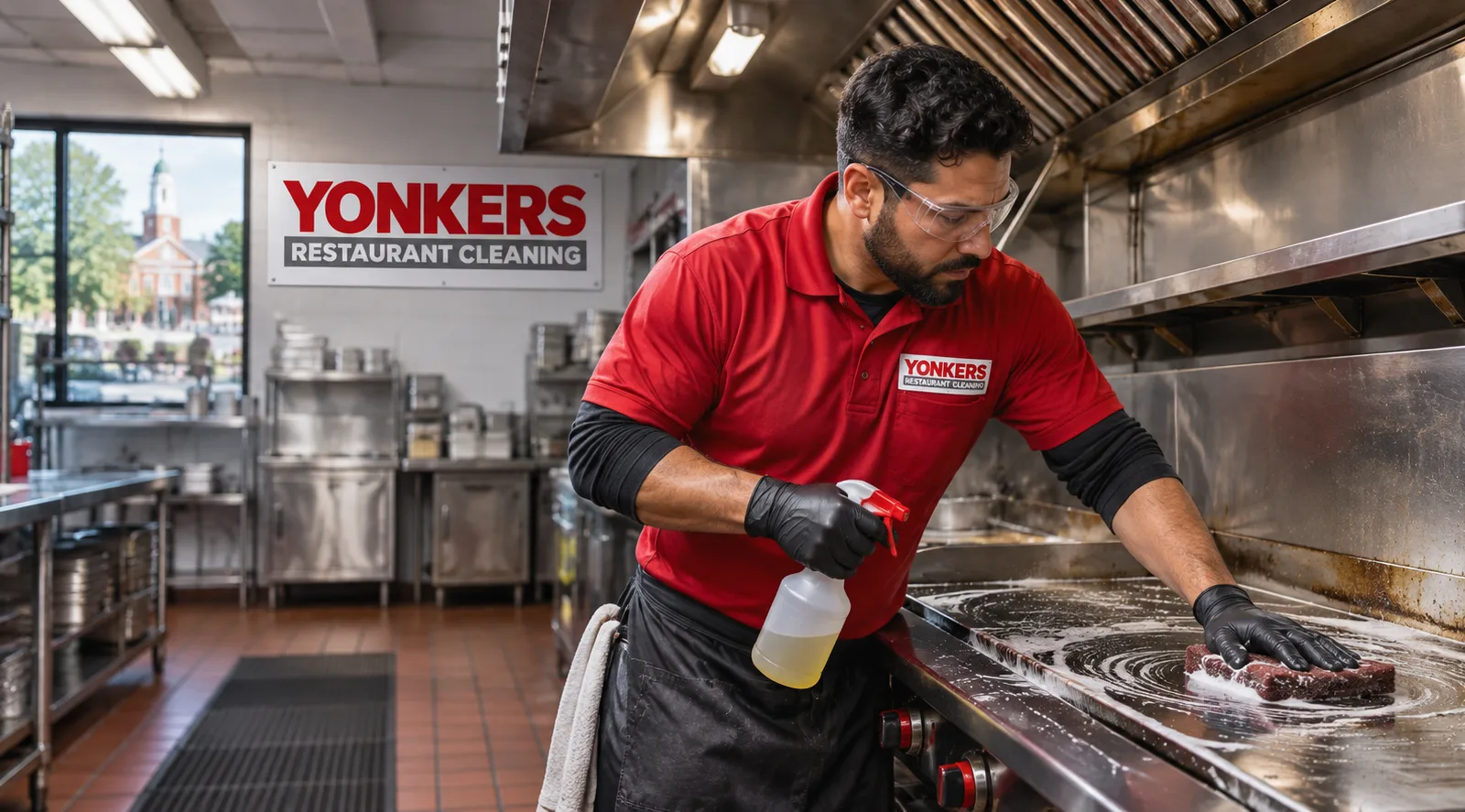
Detailed care for commercial kitchens, dining rooms, and service areas, with a cleaning plan built around your equipment, operating hours, and sanitation priorities.
Restaurant Cleaning Framingham should address the conditions that ordinary surface wiping misses: grease beneath equipment, residue around cooking lines, buildup on washable walls, and soil in high-traffic dining areas. Yonkers Restaurant Cleaning develops the scope around the way your restaurant operates, rather than applying the same checklist to every property.
The work can cover back-of-house and front-of-house areas, including cooklines, prep surfaces, floors, baseboards, storage areas, dining rooms, restrooms, and staff spaces. We clarify which equipment can be cleaned safely, what needs to be moved, and which tasks remain the responsibility of specialist contractors. That distinction matters for exhaust systems, fire-suppression components, electrical equipment, and other regulated systems.
Our working methods come from an experienced restaurant team in Yonkers, NY, and each Framingham assignment begins with a practical review of access, finish types, soil levels, and scheduling constraints. The result is a written scope that managers can review before service begins.
Commercial kitchen cleaning must fit around food preparation, deliveries, closing duties, and reopening. Before work starts, food and single-service items should be stored or protected, cooking equipment should be shut down and cool, and staff should identify surfaces with manufacturer-specific care requirements. We then work through the agreed zones in an order that limits cross-contamination and unnecessary foot traffic.
Degreasing is matched to the surface and soil. Stainless steel, quarry tile, sealed concrete, rubber flooring, painted walls, and food-contact surfaces do not all tolerate the same chemistry or agitation. Product labels, dilution requirements, dwell times, and rinsing instructions guide the process. Food-contact surfaces receive the required rinse and sanitizing treatment after soil has been removed. Sanitizer does not replace cleaning; grease and food residue must be removed first.
Framingham restaurants near busy commercial corridors may contend with frequent deliveries and heavy customer turnover, while downtown businesses can have tighter loading and waste-handling access. Winter salt and wet grit also enter dining rooms and kitchen approaches during Massachusetts cold weather. Entry mats, corners, grout lines, and floor edges may therefore need added attention during the winter season.
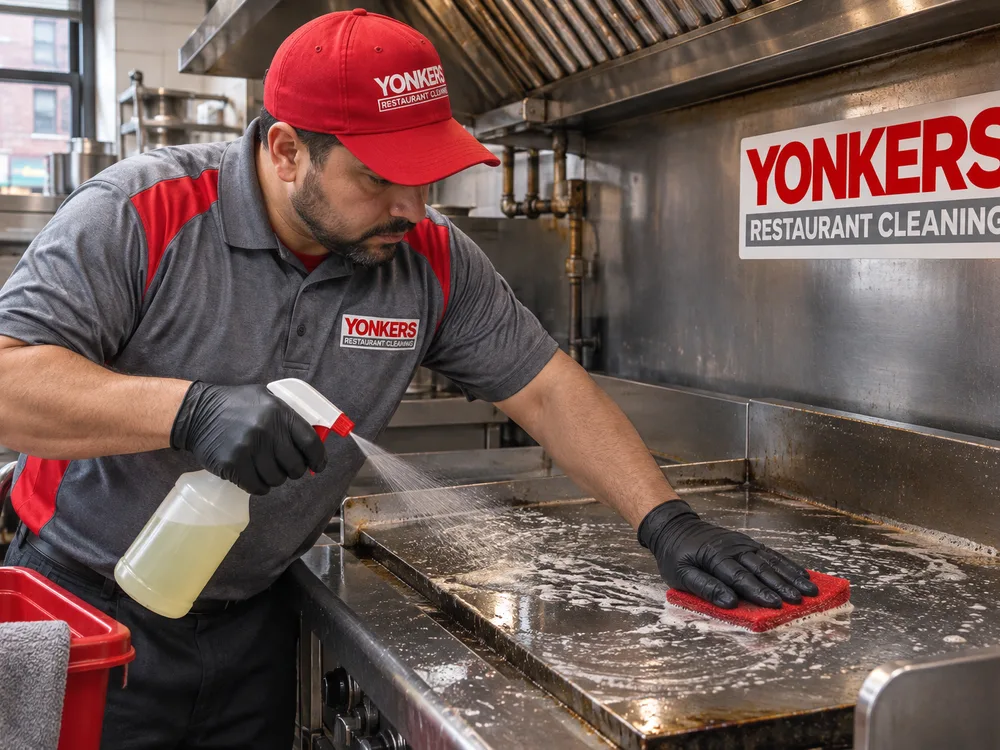
Degreasing may cover accessible exteriors, control surrounds, sides, legs, casters, splash areas, and the floor beneath movable equipment. Equipment is cleaned only when it is safely shut down and cool.
Work can include washable prep surfaces, sinks, shelving exteriors, wall areas, and floors. Food-contact surfaces are handled according to product directions for cleaning, rinsing, and sanitizing.
Scrubbing targets traffic lanes, perimeter buildup, grout, corners, and accessible drain surrounds. The method depends on the flooring material, slip risk, and drainage available.
Tables, seating, ledges, baseboards, floors, entry glass, and other high-touch surfaces can be incorporated into the scope for a consistent front-of-house presentation.
Fixtures, partitions, dispensers, touchpoints, floors, and washable walls can be cleaned using separate tools and procedures to reduce cross-contamination.
Accessible shelving exteriors, floors, corners, and receiving areas can be addressed after products are protected or relocated by restaurant staff.
We review the kitchen, dining room, restrooms, storage areas, access points, equipment clearances, and problem spots. Managers can identify inspection concerns, recurring grease, and surfaces that need special handling.
The plan identifies included areas, exclusions, preparation duties, and timing. A one-time deep clean may require more access and equipment movement than recurring maintenance.
Food, utensils, paper goods, and sensitive items are removed or covered as agreed. Cleaning tools are separated by area, and caution controls are used around wet floors and active work zones.
Work generally progresses from higher surfaces to lower surfaces and from cleaner zones toward heavier soil. Degreasing, agitation, soil removal, rinsing, and sanitizing are completed where each step applies.
The agreed areas receive a final check for residue, missed edges, standing water, and items that require follow-up. Any maintenance issue noticed during cleaning can be reported to the manager.
A deep clean addresses accumulated soil and hard-to-reach areas that are difficult to handle during daily closing duties. It may include detailed degreasing around equipment, perimeter scrubbing, washable wall care, baseboards, shelving exteriors, and front-of-house detailing. The exact scope depends on safe access and what restaurant staff can clear before arrival.
Recurring service is designed to prevent that buildup from returning as quickly. Frequency depends on cooking volume, menu, hours, floor traffic, ventilation performance, and the restaurant's internal cleaning routine. Frying and high-heat cooking often create heavier grease deposits than low-grease preparation. A practical schedule may assign certain zones to every visit while rotating lower-priority detail work.
Cleaning near exhaust hoods is different from servicing the exhaust system itself. Hood, duct, fan, and fire-suppression work may require qualified specialist contractors and should remain separate unless specifically included by an appropriately trained provider. Restaurant cleaning also does not replace pest control, equipment repair, grease-trap pumping, or regulatory inspections.
Restaurant layouts and access conditions vary across Framingham. Downtown properties may have compact kitchens, limited staging space, and shared service access. Restaurants around Route 9 commonly operate in larger commercial properties where parking-lot grit, delivery traffic, and broad dining floors influence the workload. Properties near the Framingham Centre Common may occupy older buildings with tighter rooms or finish materials that require more cautious testing. These conditions affect crew movement, equipment access, drying time, and the hours available for work.
A good proposal identifies the work rather than relying on a broad promise to deep clean. It should state which rooms and surfaces are included, whether movable equipment will be shifted, who empties shelves, how food-contact surfaces are handled, and whether waste removal is part of the assignment. It should also identify exclusions such as interior electrical components, hot equipment, hood ducts, and inaccessible structural spaces.
Yonkers Restaurant Cleaning can plan around an overnight closure, a scheduled dark day, or another approved service window. Managers receive the clearest pricing when they provide the approximate kitchen and dining area sizes, operating hours, cooking style, floor materials, current condition, and the date by which work is needed.
Restaurant cleaning in Framingham typically ranges from about $500 to $1,500 for a smaller one-time deep clean, while larger kitchens or heavy grease restoration may run from $1,500 to $4,000 or more. Recurring visits are usually priced separately after a walkthrough. Final cost changes with square footage, cooking volume, soil level, equipment movement, floor condition, access, service hours, and the exact areas included. Hood ducts, grease traps, and specialist equipment work may require separate contractors. The exact price is confirmed after an on-site assessment and written scope.
Arrange a walkthrough to define the cleaning priorities, access requirements, exclusions, and service window before work is scheduled.
Call for a Free QuoteTell us about your kitchen, dining areas, operating schedule, and current cleaning concerns. We will review the work and outline a practical service plan for your Framingham restaurant.