Kitchen Work Areas
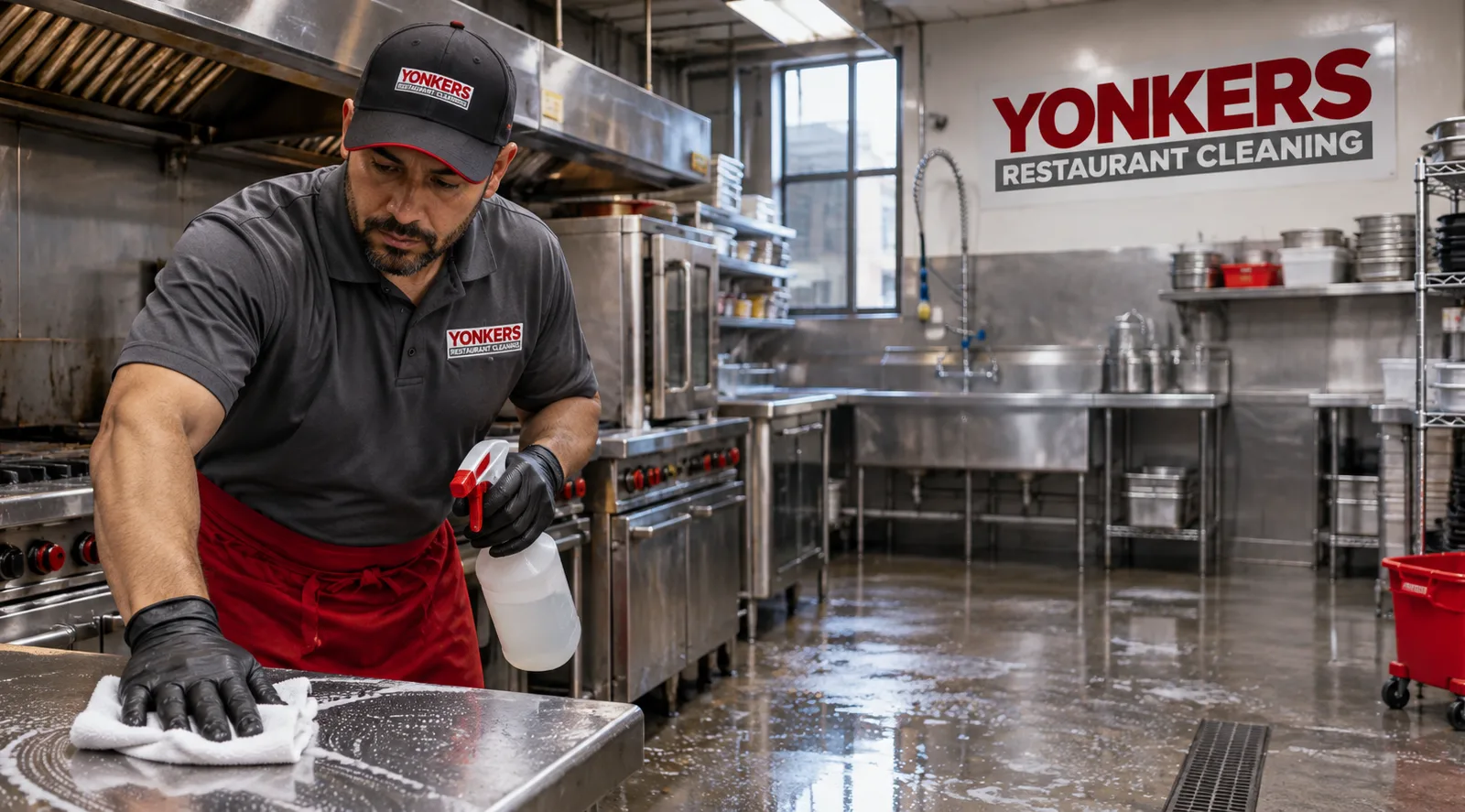
Prep tables, sinks, washable splash surfaces, equipment exteriors, shelving fronts, floor edges, and accessible spaces beneath workstations can be assigned to a documented checklist.
Serving Yonkers, New York & surrounding areas
Open 24/7
Detailed kitchen, dining room, and restroom cleaning built around your operating hours, facility needs, and food-service standards.
Restaurant Cleaning Leominster gives owners and managers a consistent plan for keeping food-preparation areas, guest spaces, and restrooms ready for business. A proper scope accounts for the surfaces in your facility, daily traffic, cooking volume, grease buildup, and the times when cleaning can occur without disrupting staff or customers.
Yonkers Restaurant Cleaning brings the practical methods of an experienced restaurant team in Yonkers to each assignment. We start by discussing your operating schedule and inspecting the areas included in the work. The resulting checklist can separate daily duties from weekly detail work and periodic deep cleaning, so your employees know what our crew handles and what remains part of the restaurant's in-house routine.
Leominster restaurants deal with wet winter entryways, road salt, spring mud, and changing customer traffic throughout the year. Entry mats and hard floors may need added attention during snow and rain, while busy dining periods can increase demands on restrooms and touchpoints. A written cleaning plan can be adjusted when seasons, opening hours, or service volume change.
Commercial kitchens require a different approach from ordinary office cleaning. Work may include degreasing accessible equipment exteriors, wiping stainless steel surfaces, cleaning prep tables, sanitizing suitable food-contact surfaces, washing splash areas, and scrubbing floors. Crews should follow label directions for dwell time, dilution, surface compatibility, and required rinsing.
Cleaning and sanitizing are separate steps. Cleaning removes grease, crumbs, and other soil. Sanitizing follows on an already-clean surface with a product approved for the intended use. Using the correct sequence matters because visible residue can interfere with a sanitizer's performance.
The scope should identify exclusions clearly. Hood interiors, exhaust ducts, fire-suppression components, pest treatment, and equipment repair are specialized tasks that may require separate qualified contractors. Our restaurant cleaning work focuses on the accessible areas and surfaces agreed upon during the walkthrough. We also account for movable equipment, floor drains, wall-floor edges, and spaces beneath workstations when access and safety conditions allow.
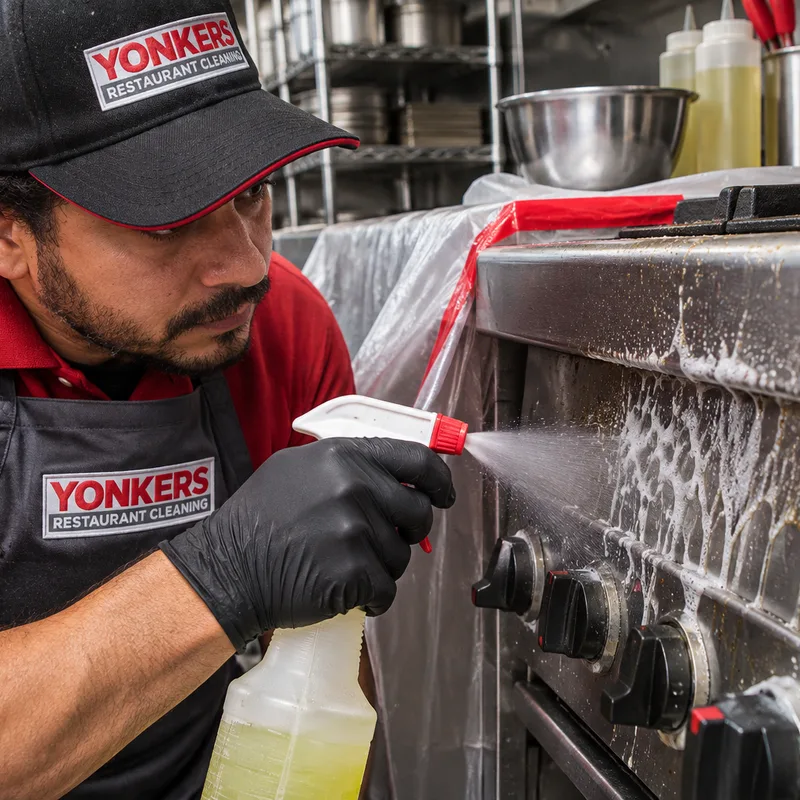
Prep tables, sinks, washable splash surfaces, equipment exteriors, shelving fronts, floor edges, and accessible spaces beneath workstations can be assigned to a documented checklist.
Tables, chairs, booths, partitions, ledges, host stations, and hard floors receive attention based on material type and customer traffic.
Doors, handles, push plates, railings, switches, and other frequently touched surfaces can be cleaned on a schedule suited to operating hours.
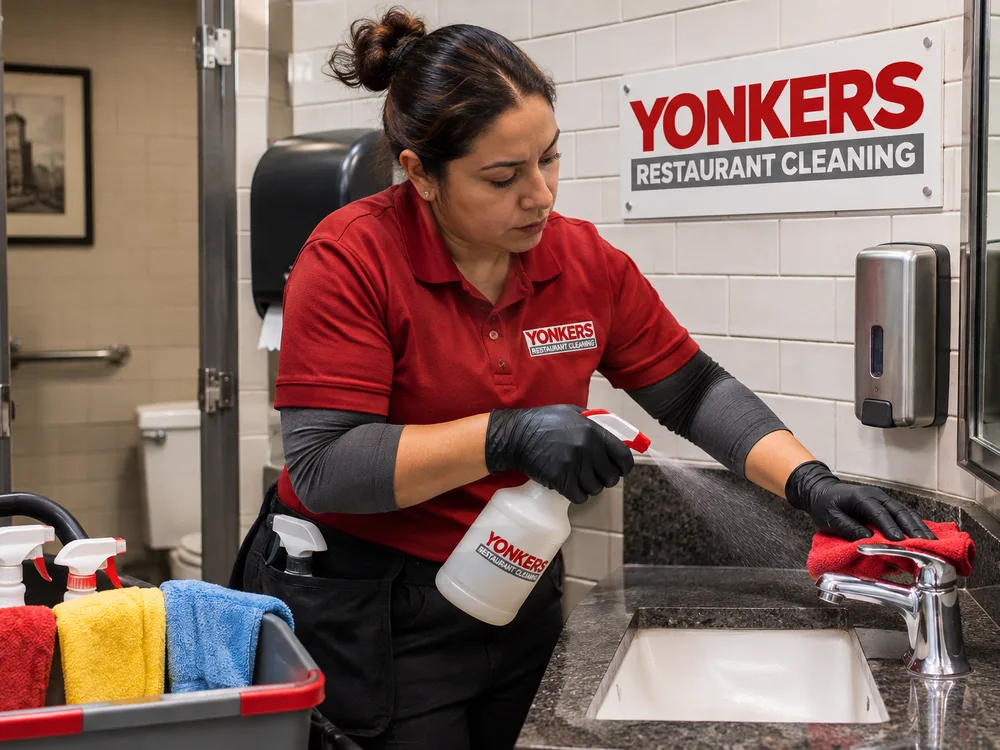
Fixtures, dispensers, partitions, mirrors, floors, and odor-prone areas are addressed using restroom-specific tools and products.
Baseboards, wall edges, chair legs, high ledges, corners, and buildup around fixed fixtures can be rotated into weekly or monthly service.
Cleaning can be planned around access arrangements, alarm procedures, locked areas, and the time needed for floors or treated surfaces to dry.
Restaurant Bathroom Cleaning Leominster should cover more than a quick fixture wipe. A sound restroom checklist includes toilets, urinals where present, sinks, faucets, counters, mirrors, dispensers, partitions, doors, handles, base edges, and floors. Soil should be removed before disinfectant is applied, and the product must remain wet for its labeled contact time.
Color-coded cloths and restroom-dedicated tools help limit cross-contamination between toilets, sinks, kitchens, and dining areas. Crews should also watch for recurring odor sources near floor-wall joints, fixture bases, drains, and waste receptacles rather than masking them with fragrance. Leaks, damaged dispensers, and other maintenance concerns can be noted for management, although repair work is separate from cleaning.
Service frequency depends on seating capacity, hours, customer turnover, and whether employees use separate facilities. A restaurant with long service hours may need internal spot checks between professional visits. We can build the contracted cleaning around those checks so responsibilities stay clear.
We review the kitchen, dining room, restrooms, entry, storage access, flooring, and other included spaces. The walkthrough also identifies delicate materials, heavy-soil areas, and access restrictions.
Each task is assigned a frequency such as every visit, weekly rotation, or periodic deep cleaning. We distinguish cleaning from sanitizing and document any excluded specialized work.
We confirm service windows, key or alarm procedures, waste handling expectations, supply arrangements, and areas that must remain locked or untouched.
The crew follows the agreed checklist, paying particular attention to grease-prone areas, restroom fixtures, touchpoints, edges, and floor condition.
Seasonal traffic, menu changes, extended hours, or a rearranged kitchen can alter cleaning needs. The scope can be reviewed so the schedule continues to match the facility.
There is no single schedule that fits every restaurant. The practical frequency depends on cooking methods, operating hours, customer volume, flooring, restroom use, and how much cleaning the restaurant's own employees perform. Frying and high-volume cooking can create more airborne grease, while beverage stations and self-service areas may need added spill and touchpoint attention.
Daily or several-times-weekly service often covers floors, restrooms, waste areas, touchpoints, and routine surface cleaning. Rotational tasks may include chair legs, baseboards, shelving fronts, corners, and wall edges. Periodic deep cleaning targets buildup that ordinary visits cannot reasonably address. The written scope should state which category each task belongs to.
Product selection also matters. Stainless steel, sealed tile, grout, painted walls, wood finishes, and resilient flooring do not all tolerate the same chemical or scrubbing method. Before broad use, products should be matched to the surface and tested in a discreet area when appropriate. Safety Data Sheets should be available for workplace chemicals, and staff should never mix products unless the manufacturer specifically permits it.
Recurring restaurant cleaning in Leominster typically ranges from about $300 to $1,200 per visit, while a larger or heavily soiled deep cleaning may run from roughly $1,000 to $5,000 or more. These are general, nonbinding ranges rather than a quoted price.
Final cost changes with square footage, kitchen grease, restroom count, service frequency, equipment access, floor condition, cleaning hours, and the exact checklist. Specialized hood or exhaust cleaning is usually priced separately. The exact cost is confirmed after a facility walkthrough and scope review.
Arrange a walkthrough to identify priority areas, set practical service frequencies, and receive a written cleaning scope built around your restaurant's schedule.
Call for a Free QuoteTell Yonkers Restaurant Cleaning about your operating hours, kitchen conditions, dining areas, and restroom needs. We will discuss practical frequencies and the next steps for a facility walkthrough.