Cooking Equipment
Reachable surfaces on ranges, ovens, fryers, griddles, broilers, and warming units can be cleaned after shutdown and cooling. The crew confirms whether removable racks, trays, grates, and drip components are included.
Serving Yonkers, New York & surrounding areas
Open 24/7
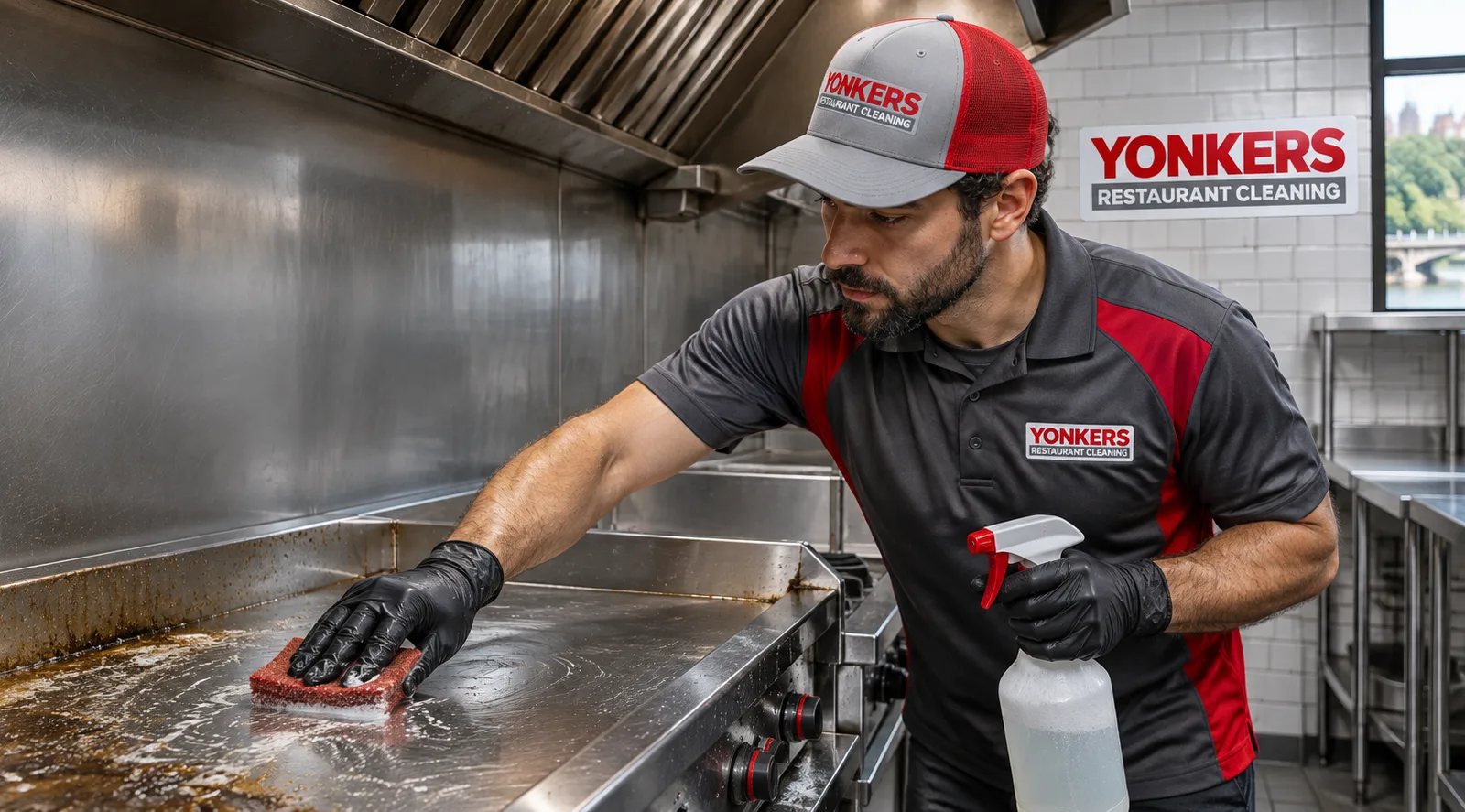
Detailed cleaning for commercial cooking equipment, prep areas, and hard-to-reach surfaces, scheduled around the practical needs of your kitchen.
Restaurant Equipment Cleaning Shewsbury addresses the grease, carbon deposits, food residue, and dirt that routine staff wiping can leave behind. Yonkers Restaurant Cleaning develops a scope around the equipment on site, its condition, access limitations, and the kitchen's operating schedule. The aim is a thorough service with clear boundaries, so managers know what will be cleaned and what preparation is required.
Our work may cover reachable exterior and interior surfaces on suitable equipment, removable components, stainless steel surrounds, equipment legs, casters, undersides, and the floor edges exposed when movable units are pulled forward. Yonkers' restaurant specialists plan the work around the actual kitchen rather than relying on a generic checklist. Before cleaning starts, the crew confirms which appliances can be isolated, which components may be removed, and which areas must remain untouched.
Shewsbury is commonly associated with the Shrewsbury area of New Jersey, while the supplied business address is in Yonkers, New York. Because service territory and travel arrangements are not stated, availability for a Shewsbury property should be confirmed when requesting a written scope.
A commercial kitchen contains several surface types and soil conditions. Cooking lines commonly collect polymerized grease and carbon around ranges, fryers, griddles, ovens, salamanders, and adjacent stainless steel. Prep equipment may hold food debris around seams, guards, bases, and removable parts. Refrigeration exteriors, handles, gaskets, shelves, and accessible interior surfaces need methods suited to the manufacturer's care instructions and the material being cleaned.
The scope can also include the reachable areas around equipment. Splashbacks, stainless steel worktables, shelving, kick plates, wall junctions, and exposed floor areas often need attention when equipment is moved safely. Cleaners select degreasers and nonabrasive tools according to the surface, then rinse or wipe away chemical residue as the product label requires.
This work does not replace hood and duct cleaning, pest control, appliance repair, or staff food-safety procedures. A written scope should identify exclusions, especially electrical compartments, gas components, hot equipment, damaged wiring, and machinery that cannot be moved without a qualified technician.
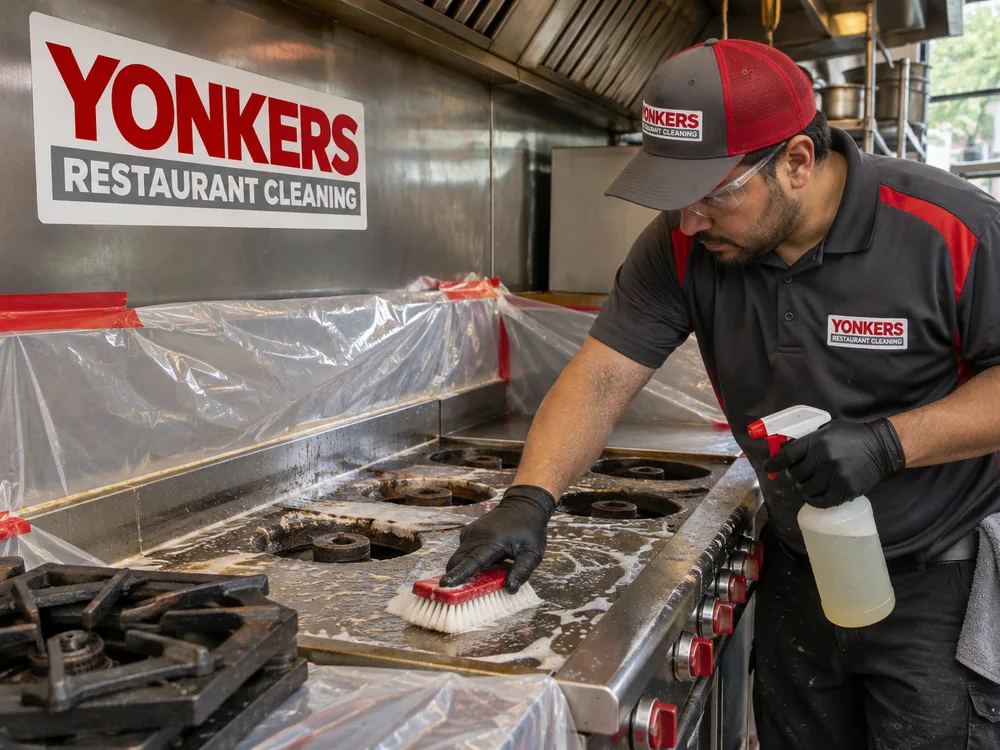
Reachable surfaces on ranges, ovens, fryers, griddles, broilers, and warming units can be cleaned after shutdown and cooling. The crew confirms whether removable racks, trays, grates, and drip components are included.
Mixers, slicers, processors, prep tables, and similar units require careful handling around blades, guards, controls, and electrical parts. Cleaning proceeds only after safe isolation and according to the agreed scope.
Refrigerator and freezer doors, handles, gaskets, shelves, exterior panels, and accessible interiors can be addressed where temperatures, stored food, and manufacturer requirements allow.
Worktables, shelving, splashbacks, and equipment exteriors are cleaned with products and pads chosen to limit scratching, streaking, and chemical residue.
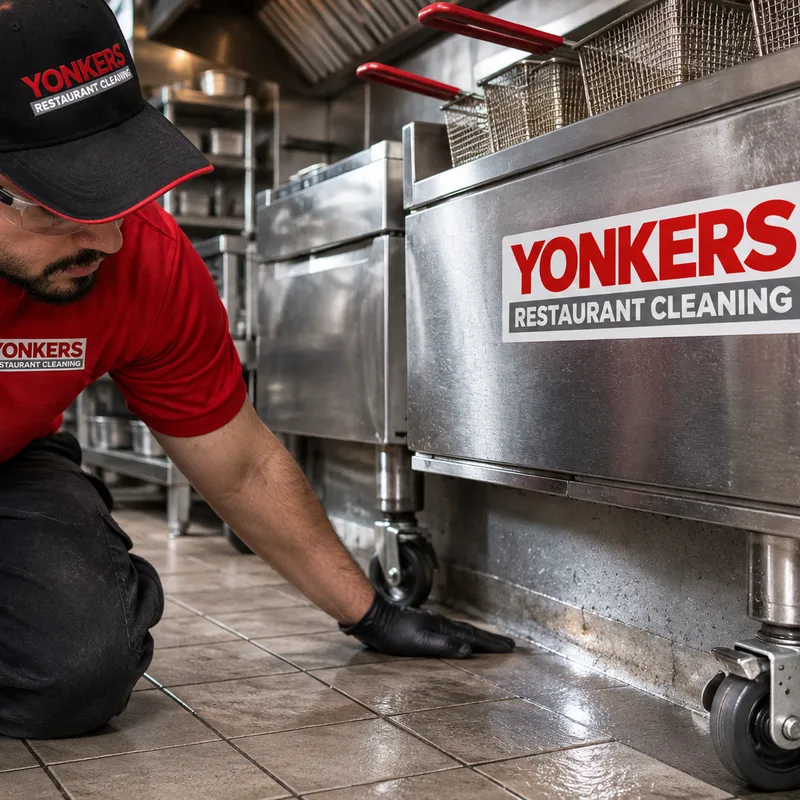
When units are designed to move and can be shifted safely, grease and debris can be removed from casters, legs, wall edges, and exposed flooring.
Handles, knobs, hinges, edges, seams, kick plates, and other high-touch or easily missed areas receive focused attention where they can be accessed safely.
The first step identifies equipment types, current soil levels, access, operating hours, sensitive surfaces, and any units that need special handling. Photos or an on-site review may be used to prepare the scope.
The written plan states what is included, what is excluded, and which tasks belong to restaurant staff. Food, utensils, packaging, and personal items generally need to be removed or protected before work begins.
Applicable equipment must be switched off, cooled, and isolated before cleaning. Gas disconnection, electrical repair, and technical disassembly should be handled only by people qualified for that work.
The crew removes suitable components, loosens grease and carbon, cleans accessible surfaces, and works around seams and edges. Tools and dwell times are adjusted to the soil and material.
Cleaner residue is removed according to product directions. Suitable components are dried and returned to their proper positions, provided reassembly does not require a service technician.
The completed work is checked against the agreed scope. Any inaccessible area, existing damage, or maintenance concern observed during cleaning can be noted for the manager.
Restaurant cleaning must fit around deliveries, food preparation, service, closing duties, and the time needed for equipment to cool. Overnight or off-hour work may be suitable for some kitchens, but availability should be confirmed in advance. A manager should also account for drying time and any required restart checks before the next shift begins.
Seasonal weather can affect the plan. Winter conditions in the New York and northern New Jersey region may complicate travel, loading access, and the movement of supplies through exterior doors. During hot weather, kitchens may take longer to cool after service. Planning the shutdown window before the appointment helps the crew begin safely and keeps the work focused.
Cleaning frequency depends on cooking volume, menu, equipment design, and grease production. A fryer station may need detailed attention more often than lightly used cold-side equipment. Instead of assigning one interval to an entire kitchen, managers can use inspection findings and recurring trouble spots to set equipment-specific schedules.
Heavy buildup can hide worn gaskets, loose components, damaged sealant, and other conditions that are easier to spot on a clean surface. Cleaning is not a mechanical inspection, but it gives restaurant managers a clearer view of accessible equipment condition and helps them identify concerns that should be referred to a qualified technician.
Grease near heat sources also deserves prompt attention. Commercial kitchen fire safety depends on several separate controls, including staff practices, equipment maintenance, fire-suppression systems, and code-compliant exhaust cleaning. Equipment cleaning addresses deposits on the agreed appliance and surrounding surfaces; it should never be presented as a substitute for licensed hood, duct, or suppression-system service.
A documented scope also supports consistent results across recurring visits. Managers can specify priority units, record access problems, and adjust future work based on actual soil levels. That makes each appointment easier to prepare for and reduces confusion about responsibilities.
Restaurant equipment cleaning in the Shewsbury area typically ranges from about $300 to $800 for a limited group of appliances, while a heavily soiled cooking line or broader kitchen scope may run from $800 to $2,000 or more. These are general, nonbinding ranges. Final pricing depends on equipment count, grease and carbon buildup, removable parts, access behind units, service timing, parking, and whether multiple visits are needed. The exact cost is confirmed after the equipment and requested scope have been reviewed.
A clear equipment list, recent photos, and preferred service window make it easier to prepare an accurate scope for your kitchen.
Call for a Free QuoteTell Yonkers Restaurant Cleaning which appliances need attention, how the kitchen operates, and when the equipment can be shut down. You will have the information needed to discuss availability and define a practical cleaning scope.